The Use of R290 in Automotive Air Conditioning: Advantages, Challenges, and Engineering Solutions
2025-08-04
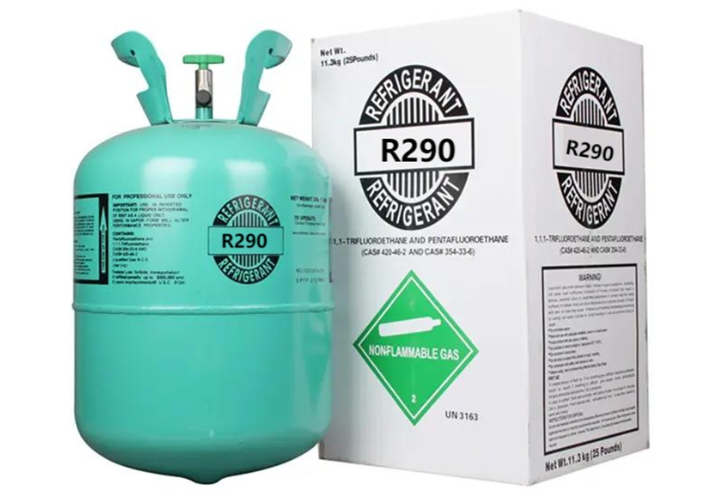
As the automotive industry transitions toward environmentally sustainable technologies, refrigerant selection in vehicle air conditioning (A/C) systems is receiving increasing scrutiny. Among emerging alternatives, R290 (propane) stands out for its exceptional environmental profile and energy efficiency. However, its high flammability presents significant engineering challenges. This article outlines the advantages and drawbacks of using R290 in automotive A/C systems, followed by specific engineering strategies proposed to mitigate its risks.
1. What are the Main Advantages and Challenges of Using R290 Electric Compressor in Automotive Air Conditioning?
Using R290 (propane) as a refrigerant in automotive air conditioning systems presents a compelling set of advantages, primarily driven by environmental considerations and efficiency gains, but it is also accompanied by significant challenges, mainly due to its high flammability.
1.1 Main Advantages of Using R290:
◆ Exceptional Environmental Performance:
--R290 boasts a Global Warming Potential (GWP) of 3, which is extremely low, especially compared to R134a (GWP ~1400) and even lower than R1234yf (GWP 4). This makes it a highly environmentally friendly alternative.
--It has zero Ozone Depletion Potential (ODP), meaning it does not harm the ozone layer.
Refrigerant Type
Environmental Impact (GWP)
Safety
Efficiency
Cost
Notes
R744 (CO2)
1 (Very Low)
Non-toxic, non-flammable, but requires high pressure operation
High efficiency in high temperature environments, low efficiency in low temperature environments
High system cost
Environmentally friendly but requires high-pressure design
R290 (Propane)
3 (Very Low)
Flammable, requires strict safety measures
High efficiency, good cooling effect
Low refrigerant cost, high system cost
Good environmental performance, but safety attention required
R134a
1430 (High)
Non-toxic, non-flammable
Good energy efficiency, but not as good as new refrigerants
Low system cost
Widely used, but poor environmental performance
R1234yf
4 (Very Low)
Slightly flammable, requires certain safety measures
Comparable to R134a, slightly better
High refrigerant cost, moderate system cost
Good environmental performance, gradually replacing R134a
◆ High Energy Efficiency and Performance:
--R290 has a higher latent heat of vaporization, contributing to its excellent performance as a refrigerant.
--Its small molecular weight and good fluidity result in low resistance during transport within the system.
--R290 offers greater refrigeration capacity and high heat exchange efficiency. To achieve the same cooling effect, it requires a smaller refrigerant charge compared to R134a.
--These properties can lead to a reduction in the electric AC compressor's workload, potentially decreasing electricity consumption by approximately 30% in electric vehicles, which helps save energy.
--R290 offers better cooling capability under high load compared to R744.
◆ Cost-Effectiveness and System Compatibility:
--R290 is relatively inexpensive to produce compared to alternatives like R1234yf.
--Its working pressure is similar to R134a, which means that switching to R290 may not require extensive modifications to existing HVAC system components and seals, potentially saving development costs and time for manufacturers and suppliers.
1.2 Main Challenges of Using R290:
◆ High Flammability and Explosion Risk:
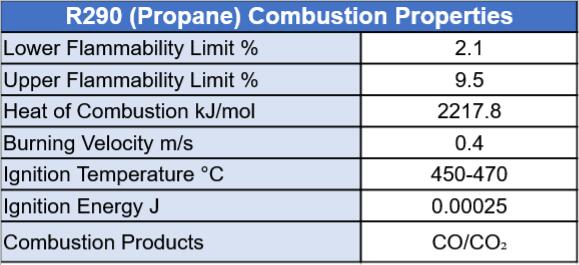
--R290 (propane) is classified as an A3 highly flammable refrigerant.
--Its lower flammability limit is very low (0.038 kg/m³), making even small leaks a potential hazard.
--R290 gas is denser than air and tends to accumulate near the ground, increasing the risk of ignition if it encounters a heat source.
--There is an explosion risk in case of leakage, especially if concentrations around components reach dangerous levels.
--Danger arises only when four specific conditions are met simultaneously (leakage, concentration, ignition source, and oxygen), but potential ignition sources in a vehicle include thermostats, compressor relays, lighting, and defrost buttons.
◆ Leakage and Permeability:
--R290 has strong permeability, requiring highly sophisticated hose designs, such as multi-layer composite structures and high-precision sealing processes at joints, to prevent even micro-leaks.
--It is colorless and odorless, making leaks difficult for humans to detect naturally.
◆ Material Compatibility and Durability Requirements:
--R290 can cause swelling in certain rubbers and plastics, necessitating the use of compatible materials like hydrogenated nitrile rubber (HNBR) or corrosion-resistant coatings such as polyamide on inner walls. Incompatible resin-type hoses with PAG lubricating oil must be avoided.
--Although its working pressure is similar to R134a, R290's saturation pressure is slightly higher, requiring hoses with enhanced pressure bearing capacity (e.g., increased cord layers) and optimized wall thickness.
--The system components must endure long-term use without fatigue fracture or impact damage, as these could lead to leaks and subsequent fire/explosion risks in the passenger cabin.
◆ Toxicity/Health Effects:
--While classified as low toxicity, R290 can cause simple asphyxiation and anesthetic effects at high concentrations.
--Exposure to high concentrations can lead to symptoms like dizziness, anesthetic states, loss of consciousness, and even suffocation at very high concentrations.
◆ Operational and Design Complexity:
--R290 exhibits poorer heating performance in cold conditions.
--Safety requires flame-retardant hose materials (e.g., fluororubber or special coatings) and integrated static discharge structures to prevent static electricity accumulation.
--Piping must be strategically laid out away from high-temperature components to minimize ignition risks.
--The system requires sophisticated leakage monitoring integration, including R290 concentration sensors near critical connection points (with a threshold of 20% of the lower flammability limit) and gas collection tanks.
--Emergency response mechanisms such as automatic shut-off valves (activating within 0.5 seconds of a leak) are crucial.
◆ Maintenance and Regulatory Concerns:
--Maintenance protocols for vehicles using R290 must strictly emphasize avoiding refrigerant leaks, ensuring good ventilation, and prohibiting open flames due to its A3 safety classification.
--Some regions currently restrict the use of flammable refrigerants.
Despite these challenges, ongoing research and commercial validation are demonstrating that safety and performance can be balanced through material innovation (e.g., fluorine-coated hoses), structural optimization (e.g., U-shaped flow channels), and intelligent monitoring. Future directions include developing nanomaterial barriers and modular pipe assemblies.
2. What Specific Engineering Solutions are Proposed to Mitigate the Flammability and Leakage Risks of R290?
To mitigate the flammability and leakage risks associated with R290 refrigerant in automotive applications, several specific engineering solutions are proposed, focusing on hose design, material compatibility, system monitoring, and emergency protocols.
Here are the specific engineering solutions:
2.1 Leakage Prevention and Detection:
◆ Hose Design and Sealing:
--Hoses must employ a multi-layer composite structure and high-precision sealing processes.
--Joints require tight assembly to prevent even micro-leaks, as the lower flammability limit is very low (0.038 kg/m³).
--Advanced detection methods like helium leak detection are recommended to ensure sealing meets the highest industry standards.
◆ Material Compatibility and Durability:
--Hoses need to be made of compatible materials (e.g., hydrogenated nitrile rubber or HNBR) due to R290's swelling effect on certain rubbers and plastics.
--Corrosion-resistant coatings, such as polyamide, should be applied to the inner wall if necessary.
--Avoid using resin-type hoses incompatible with PAG lubricating oil to prevent material degradation.
--Hoses require enhanced pressure bearing capacity, such as increasing cord layers, and must pass pulse fatigue tests (>1 million cycles), as R290's saturation pressure is slightly higher than R134a's.
--Optimized wall thickness (e.g., 1.25–1.75mm aluminum pipe combined with enhanced hoses) is crucial to prevent high-pressure deformation.
--For R290's high permeability, fluoroplastic barrier layers (e.g., PVDF) should be added to the outer layer of hoses to reduce penetration.
◆ Flow Efficiency and System Integration:
--Utilize hoses with smooth inner walls (e.g., PTFE lining) to reduce flow resistance losses.
--For systems with small diameter heat exchangers, increase the number of flow paths to balance pressure drop.
--Implement U-shaped flow channel designs (e.g., double-cavity profiled manifolds) to improve refrigerant distribution uniformity.
--Add a closed-cell foam insulation layer to the outer layer of hoses to reduce heat loss and prevent external water vapor condensation.
◆ Overall Hose Design Philosophy: The core design principles for R290 hoses are "leak-proof, flame-retardant, and corrosion-resistant," while also considering flow efficiency and system integration.
2.2 Flammability Mitigation and Safety:
◆ Material Properties:
--Hose materials must possess flame-retardant properties, such as fluororubber or special coatings.
--An integrated static discharge structure should be included to prevent static electricity accumulation, which could ignite flammable gases.
◆ System Layout:
--Piping must be laid out away from high-temperature components (e.g., compressor outlet) to minimize the risk of ignition from heat sources.
◆ Leakage Monitoring and Alarms:
--R290 concentration sensors should be placed near critical hose connection points. The threshold for these sensors is recommended to be set at 20% of the lower flammability limit to trigger system alarms in real-time.
--The system should also incorporate refrigerant leak monitoring sensors in the secondary circuit to ensure the safety of occupants and property.
--Gas collection tanks should be placed beneath the pipes to assist in leak detection.
◆ Emergency Response Mechanisms:
--The hose system should be equipped with automatic shut-off valves that can seal off the pipeline within 0.5 seconds of a leak.
--Maintenance procedures must clearly define refrigerant recovery processes to avoid open discharge.
◆ Addressing Ignition Sources: While R290 is only dangerous if specific conditions are met simultaneously, potential ignition sources like thermostats, compressor relays, lighting, and defrost buttons must be considered.
◆ Commercial Validation and Future Directions:
--Practical applications have demonstrated that safety and performance can be balanced through material innovation (e.g., fluorine-coated hoses), structural optimization (e.g., U-shaped flow channels), and intelligent monitoring.
--Future development directions include nanomaterial barrier development and modular pipe assemblies.
--An "indirect system" for R290 may be considered, though it would require additional countermeasures and potentially increase costs.
It is also noted that maintenance protocols for vehicles using R290 will need to emphasize avoiding refrigerant leaks, ensuring good ventilation, and strictly prohibiting open flames due to its A3 safety classification (low toxicity, high flammability).