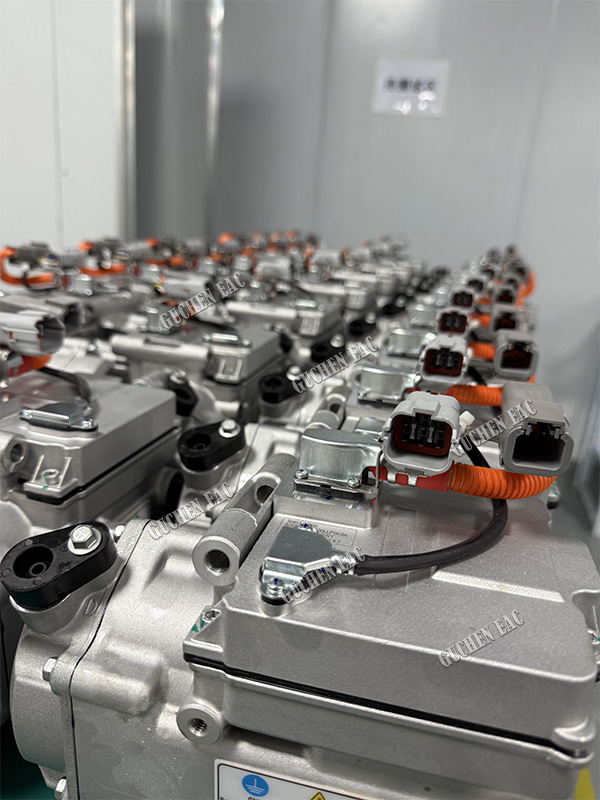
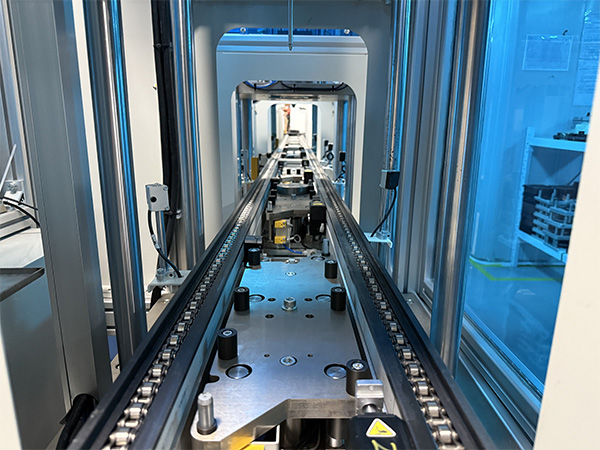
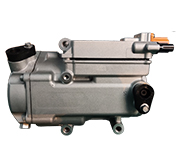
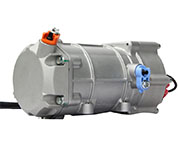
Electric AC compressors are increasingly critical for thermal management systems in NEVs — including battery electric (BEV), plug-in hybrid (PHEV), and hybrid electric (HEV) platforms. With global EV adoption accelerating, automotive HVAC and battery thermal systems require more efficient, compact, and intelligent compressors than ever before. The period from 2026–2030 is expected to witness major technology breakthroughs in multiple fronts: efficiency enhancement, system integration, artificial intelligence (AI)-driven control, lightweight materials, and greener design architectures.
| Dimension |
2025 Status |
2030 Forecast |
CAGR |
Key Driving Factors |
| Global Market Size |
~RMB 32.0 billion |
~RMB 50.0 billion |
9.3% |
Rising NEV penetration, wider adoption of heat pump systems |
| China Market Size |
~RMB 21.0 billion |
~RMB 33.0 billion |
9.5% |
Large market base, slightly moderated growth rate |
| Global Shipments |
~20.3 million units |
~30.0 million units |
8.1% |
Diversification of application scenarios |
| China Shipments |
~13.5 million units |
~20.0 million units |
8.2% |
Capacity expansion and export growth |
| Heat Pump System Penetration |
~35% |
~50% |
7.4% |
Demand for improved winter driving range |
| Variable-Speed Control Adoption |
~80% |
~90% |
2.4% |
Energy efficiency optimization requirements |
| SiC Power Device Penetration |
~15% |
~30% |
14.9% |
Power semiconductor technology upgrades |
| Energy Efficiency (COP) |
3.0–3.5 |
3.5–4.0 |
2.3% |
Technology iteration and efficiency improvement |
| Localization Rate (China) |
~75% |
~85% |
2.5% |
Accelerated domestic substitution |
| Industry Concentration (CR3) |
~56.7% |
~60% |
1.1% |
Expanding advantages of leading manufacturers |
| Gross Margin Level |
20–25% |
18–22% |
–2.0% |
Intensifying competition and price pressure |
| Cost Reduction Range |
Baseline |
–15% to –20% |
–4.3% |
Technological optimization and economies of scale |
1. High-Efficiency Systems
Electric compressors are far more efficient than traditional belt-driven compressors because they can vary speed independently of engine revolutions, enabling precise thermal control and lower energy consumption. Variable-speed architectures and advanced inverter technologies have already demonstrated 20–40% energy savings in operational tests, with permanent magnet motors achieving efficiencies exceeding 95%.
Looking ahead, performance goals for COP values increasing from typical ranges (3.0–3.5) to 3.5–4.0 or beyond will likely depend on:
◆ Advanced motor designs such as axial flux and switched reluctance machines
◆ Silicon carbide (SiC) power electronics for lower loss and higher switching frequencies
◆ Improved refrigerant cycle designs optimized through simulation and real-time control
By reducing electrical losses and dynamically adapting torque and speed based on real-world demand, these technologies converge to significantly enhance thermal efficiency — crucial for extending vehicle range and increasing battery life.
2. Integrated Motor-Compressor Architectures
Automakers are pushing toward mechatronic integration of motors, power electronics, and compressor mechanisms into unified modules. This trend reduces part count, simplifies assembly, and shrinks footprint — with projections of 30% fewer components and ~20% smaller volume compared to discrete designs by 2030.
Key drivers include:
◆ Integrated drive electronics that embed motor controllers directly with the compressor
◆ Shared cooling circuits between traction and accessory subsystems
◆ Modular designs that fit into scalable thermal management platforms
This architectural consolidation improves reliability, reduces wiring complexity, and lowers overall cost — making integrated solutions favorable for high-volume OEM adoption into next-generation electric platforms.
3. Smart and AI-Enabled Controls
Digital transformation in automotive systems is enabling electric compressors to be much smarter than traditional mechanical controls. Smart compressors can communicate with vehicle thermal and battery management systems to optimize output, anticipate demand peaks, and schedule maintenance before failures occur.
AI and machine learning algorithms in automotive compressors enable:
◆ Predictive maintenance based on usage patterns and sensor feedback
◆ Real-time adaptive control under varying ambient and load conditions
◆ System-level optimization reducing energy draws based on driver behavior
Connected vehicle frameworks will further allow remote diagnostics and firmware updates, improving uptime and extending component life — driving intelligentization rates upward toward ~70% adoption by the end of the decade.
4. Lightweight Design and Materials
Weight reduction remains a cornerstone of vehicle efficiency. Electric compressors are adopting advanced lightweight materials and optimized structural designs to reduce mass by 10–15% without compromising durability. Composite housings, high-strength aluminum alloys, and precision-cast internal geometries are becoming mainstream.
Simultaneously, AI-augmented design tools (e.g., topology optimization and generative design) accelerate iteration cycles and enable structures that balance performance with manufacturability. This focus on lightweighting has a double payoff: lowering overall vehicle mass and reducing the parasitic load on powertrain and battery systems.
5. Green and Sustainable Technologies
Environmental performance is no longer optional. Electric compressors are increasingly designed for green refrigerant compatibility (e.g., low GWP HFOs and CO₂ refrigerants), improved recyclability, and reduced embedded energy. Market research forecasts that automotive e-compressor markets will increasingly emphasize sustainable refrigerants and closed-loop manufacturing processes as regulatory frameworks tighten.
Sustainability breakthroughs include:
◆ Higher materials recycling rates (targeting ~50%)
◆ Use of bio-based or easily separable components
◆ Compliance with future environmental mandates across regional markets
By 2030, the integration of green refrigerants and circular economy principles will be a major differentiator in compressor technologies for OEMs targeting global sales.
Conclusion
The
electric AC compressor — once an auxiliary HVAC component — is now central to NEV thermal management innovation. Between 2026 and 2030, we’ll see transformative advances across efficiency, integration, smart controls, lightweight structures, and sustainability. These synergistic trends not only enable better vehicle performance and passenger comfort but also contribute to more durable, energy-efficient, and eco-friendly automotive systems overall.
The research landscape and market data clearly show that EV manufacturers and suppliers who align with these trends will gain competitive advantage in an accelerating global market.